UKGBC Systems Change Programme
Transforming the built environment is a complex, interconnected challenge. Incremental improvements alone will not deliver change at the speed and scale required. We also need to understand the root causes of persistent issues and the systemic barriers that prevent progress. UKGBC’s Systems Change Programme brings together stakeholders from across the built environment to explore these barriers and help accelerate the transition to a just and regenerative built environment.
Phase I – What do we mean by Systems Change in the Built Environment? (September 2023 – March 2024)
Building on work undertaken by UKGBC’s Leadership Alumni Network to identify the levers and barriers to achieving net zero by 2030, Phase I of UKGBC’s Systems Change Programme explored the systems that shape the built environment. With support from experts around the world, we brought together individuals from across the built environment to unpack the root causes of the sustainability challenges at play across our sector, and the different stakeholder capabilities needed to enable change.
UKGBC hosted a six-month conference series designed to:
- Unpack and build consensus around the urgent action and transformational change needed within our sector.
- Build personal and collective understanding of systems change theory and practice.
- Explore key levers of change within the built environment, facilitating conversations and learning across a diverse representation of the value chain.
- Equip and inspire participants to collaborate, self-organise, and co-define next steps and further areas of work.

The conference had four key milestones:
- 27th September 2023:听Kick-off webinar to outline ways to get involved and build understanding of systems and systems change theory and practice.
- 16-17th October 2023: Conference kick-off in London. Five 鈥淔ractal Groups鈥� of participants self-organised around key intervention points:
- Purpose of the Built Environment
- Transforming Finance
- Voices & Collaboration
- Materials
- Power & Culture
- 11th January 2024: Mid-programme online check-in to explore Fractal Group progress and activities.
- 6-7th March 2024: Systems Change Summit in London, concluding the conference. Participants discussed the findings of their 6-month journey. We welcomed fresh voices and explored what鈥檚 next.

Meet the External Experts and UKGBC Member Leaders who supported our Systems Change Conference Work
What Did We Learn from Phase I?
Phase II – Applying Systems Change Learnings to live UK Real Estate Projects (May 2024 – March 2026)
Our Systems Change manifesto prompted further conversations among participants and helped build a clearer understanding of the current system – including its interdependencies, leverage points and limitations.
In May 2024, supported by executive alumni from UKGBC’s Recalibrate leadership programme, we set out to turn these learnings into action. We wanted to test how systems-based approaches could be applied to real-world decision-making and develop a replicable process for catalysing radical collaboration across the built environment.
To test this approach in practice, we worked with live real estate projects, using them as opportunities to challenge traditional ways of working, explore systemic barriers, and how more sustainable outcomes could be enabled through collaboration and new approaches to problem-solving.
We offered pro bono “critical friend” support from senior executives and professionals with expertise in sustainability and systems change to developers, investors and other stakeholders working across any asset class. Following a call for projects among UKGBC members, two projects in London were selected to take part in Phase II.

In September 2024, the UKGBC team invited members of the Systems Change programme and its wider alumni network to join an Advisory Group for Phase II. Participants were allocated to one of the two project groups, based on the project they wanted to explore. Each Advisory Group met for five sessions, providing a structured space to apply a Systems Change lens to the project, explore what was preventing progress and identify opportunities to shift how the challenges were understood and discussed.
Across the five sessions, the groups explored four key questions:
- WHAT IS STUCK?听Identify the challenges and what might help moving them forward.
- WHERE CAN WE INTERVENE?听Explore assumptions and potential leverage points.
- WHAT CHANGES? Apply a Systems Change lens and explore how this shifts the narrative.
- HOW CAN WE OPEN UP NEW CONVERSATIONS? Identify ways to communicate the challenge differently and enable new approaches.

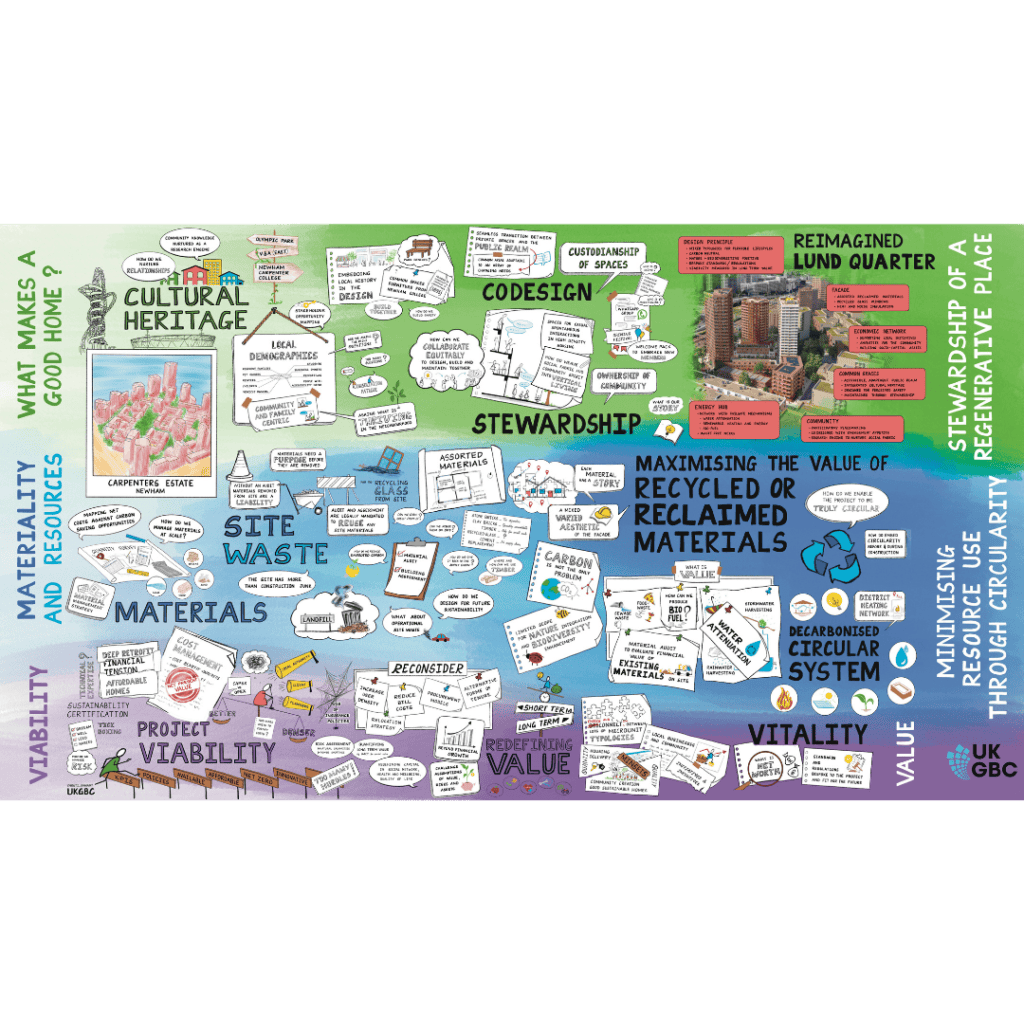
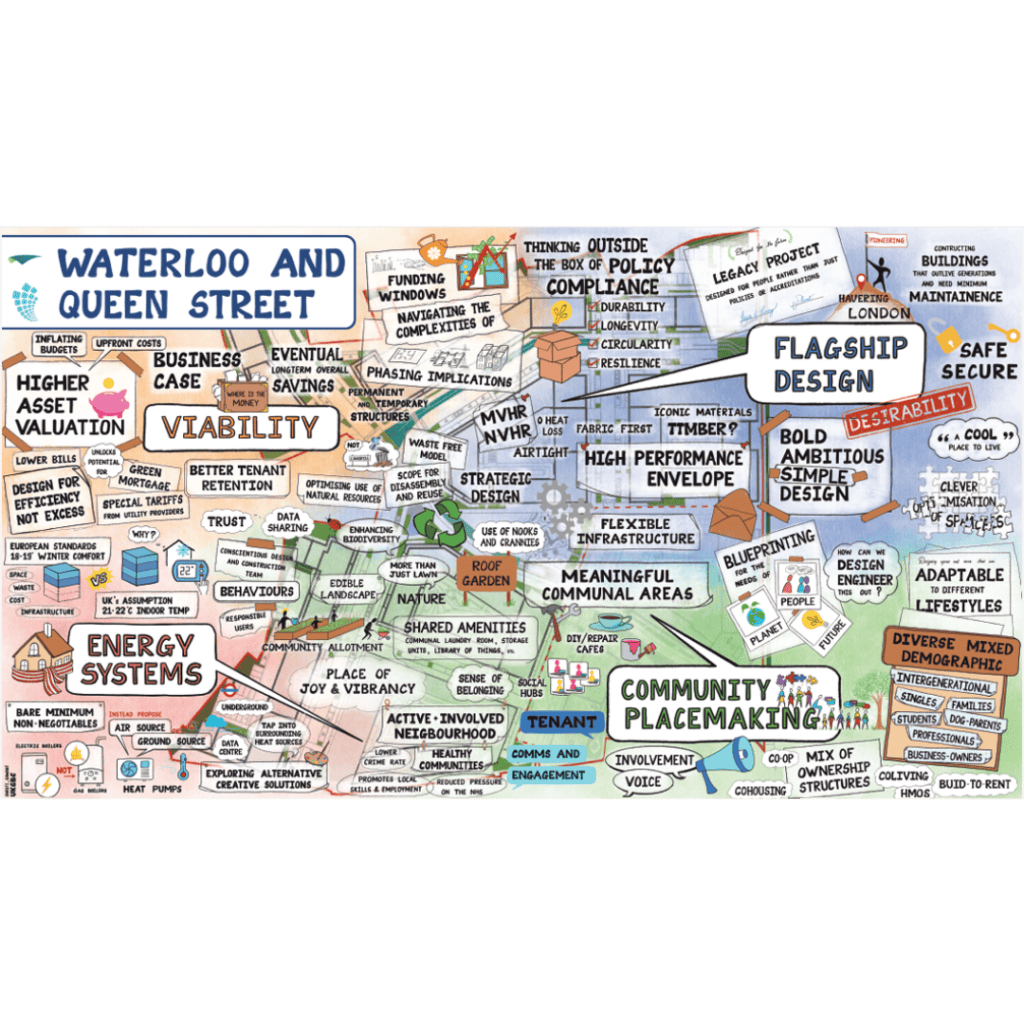
Throughout the project exploration, UKGBC developed a storyboard to capture the key conversations, insights and shifts in thinking that emerged through the Advisory Group process. It brought together different perspectives explored across the sessions and made visible the connections between sustainability and the wider value and objectives of the project.
By the final session, the storyboard had evolved into a tool for communicating the group’s learning and opening up new conversations about how a Systems Change approach could help address the project’s challenges and unlock greater value.
Explore the two projects and see how systems thinking was applied to each below.
PROJECT 1: Lund Quarter, Carpenter’s Estate, Newham With and
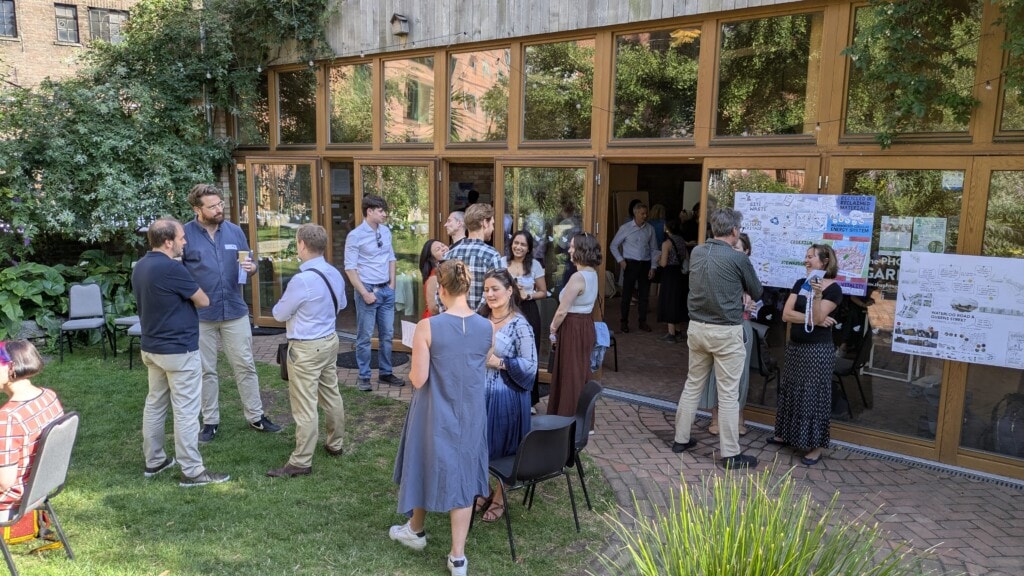
The Carpenter鈥檚 Estate in Newham is undergoing a major residential regeneration, centred around a new neighbourhood park and a mix of new and refurbished homes, public spaces and community and commercial uses.听
听The Advisory Group focused on Lund Quarter, a 400-home phase of the masterplan that combines new-build and refurbishment. The project includes the retention and refurbishment of the existing 23-storey, 167-home Lunt Point tower, alongside new homes, 1,645m虏 of commercial space and 4,500m虏 of new public realm and landscaping. The scheme comprises an approximately 50/50 mix of private and affordable homes.
At the time of the programme, the project was at an early design stage, providing an opportunity to explore how a Systems Change approach could influence the project before key decisions were locked in.听
听The project team brought a strong appetite to explore new ways of working and to consider how sustainability could be integrated into wider project objectives, rather than treated as a standalone requirement. The Advisory Group explored where there were opportunities to shift the way decisions were made, identify connections between different project priorities, and unlock greater value through a more systems-led approach.
PROJECT 2: Waterloo and Queen Street, Havering with and
Waterloo and Queen Street (WQS) is a joint venture between Wates and Havering Council delivering a major residential regeneration across a 10-building masterplan. The wider scheme is planned to deliver around 1,380 homes alongside commercial space, across four phases.听
听The Advisory Group focused on Blocks 9 and 10, two lower-rise buildings within the first phase of the masterplan, which will deliver around 100 homes. The homes will include a mix of affordable, social and shared ownership housing. The project was at an early stage of strategic definition and brief development, creating an opportunity to explore how sustainability ambitions could be embedded before the design was fixed.听
听The project faced a significant challenge around viability, with the team working to establish a route back to budget while meeting building regulations and other requirements. This was already creating pressure on the project’s sustainability ambitions. At the same time, changes to the planned energy infrastructure meant that the original ambition to connect to a heat network was no longer viable for these blocks, with the team required to brainstorm creative interim solution until the project phase comprising the energy hub was green lit.听
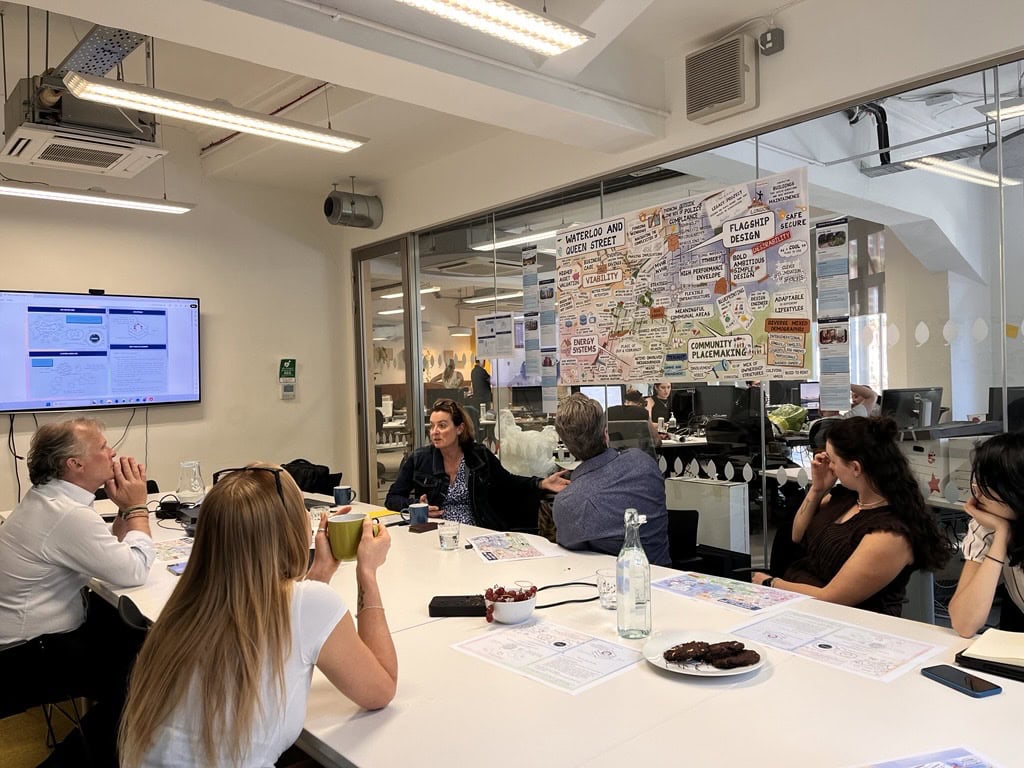
The Advisory Group therefore explored how sustainability could be approached within real financial and delivery constraints, and whether different ways of thinking, collaborating and making decisions could help unlock opportunities that might otherwise be missed. This included considering building fabric and energy performance, utilities and micro-grids, modern methods of construction, funding opportunities and the potential to use the wider masterplan as an asset in finding solutions. The group also agreed that the most crucial aspect of making this project a success is social cohesion and behavioural change that encourages stewardship over occupancy in the residents as well as users.听
听The work also provided an opportunity to explore how the sustainability ambitions of both Wates and Havering Council could be translated into practical decisions for individual buildings, and how the project could establish a benchmark for future schemes across the wider masterplan and Havering’s portfolio.听
What Did We Learn From Phase II?
The live project work gave us an opportunity to test Systems Change thinking in practice. It showed the value of creating space for different conversations, while also highlighting what is needed to turn new thinking into lasting change. Three key areas of learning emerged from the process:
Challenging the Status Quo
Shifting how we think about value
Building foundations for change
Bringing a Systems Approach to Your Project
Do you have a project where a different way of thinking could help unlock progress?
糖心视频 interested in working with organisations to explore how Systems Change approaches can be applied to real-world projects – bringing together different perspectives, challenging assumptions and identifying opportunities to create greater value.
If you have a project where you are facing a complex challenge, or where you want to explore what could be possible by working differently, we’d like to hear from you.

Contacts


With thanks to our Strategic Partners: