
UKGBC responds to the CCC's Scotland Progress Report

David Steen, Senior Policy Advisor – Scotland at UKGBC, said:
The Climate Change Committee鈥檚 latest assessment confirms that Scotland has made meaningful progress in reducing emissions. But it also highlights a persistent and growing risk: the slow pace of decarbonisation across the building stock.
Homes and workplaces remain one of Scotland鈥檚 largest sources of emissions, yet delivery at the scale and speed required is still not happening. As the Holyrood elections approach, the focus must shift decisively from ambition to implementation.
The next Scottish Government will need to provide certainty through clear and enforceable standards, long-term funding commitments, and a joined-up approach that tackles fabric efficiency alongside low-carbon heat. Without this, Scotland risks falling behind on future carbon budgets and missing the opportunity to deliver warmer homes, lower bills, and a just transition for households and businesses alike.鈥�
UKGBC Policy Team Analysis
The CCC’s latest assessment of the Scottish Government’s progress in reducing emissions confirms that Scotland retains the ambition and many of the foundations needed to meet its climate goals with ‘credible plans’ and ‘plans with only some risks’ in place for 91% of the emissions reduction needed to achieve Scotland’s First Carbon Budget (2026 to 2030). It is encouraging to see progress on measures such as heat pump uptake (18% installation increase), electric vehicles and peatland restoration, and that credible plans are now in place for much of the First Carbon Budget.
However, the continued absence of detailed, long-term policy for decarbonising Scotland’s buildings remains a serious concern. Homes and workplaces are still one of the country’s largest sources of emissions, and current proposals are too high-level to give property owners, supply chains and investors the certainty needed to act at the pace and scale required.


The CCC听identified听buildings as a core priority for the next year: 鈥�A clear plan for听decarbonising听home heating. Funding announced in the Scottish Budget 2026-27 must be confirmed and extended beyond the next听financial year. The upcoming Heat in Buildings Strategy and Delivery Plan should be published as soon as possible this year and could include a combination of continued financial support, regulation, skills听development听and public engagement. Clear plans for heat networks are also needed. It should include minimum energy efficiency standards for privately rented homes and a strategy for听decarbonising听tenements, which make up around 25% of Scottish homes.鈥�听
An听effective听Heat in Buildings听agenda must听provide clear and enforceable standards, long-term funding certainty,听and a whole-building, whole-system approach that reduces emissions while improving affordability,听comfort听and health,听particularly for households in fuel poverty. This should include area-based retrofit programmes, strong听minimum听standards across all tenures (including non-domestic buildings),听clarity听on听heat听networks, and sustained investment in skills and supply chains.听
With听the Holyrood elections approaching, there is a critical opportunity for Scotland鈥檚 political leaders to move from ambition to delivery.听UKGBC听and听our members stand ready to work with the next Scottish Government to accelerate action across the built environment and help Scotland re-establish itself as a climate leader.听


Scottish Policy


Related
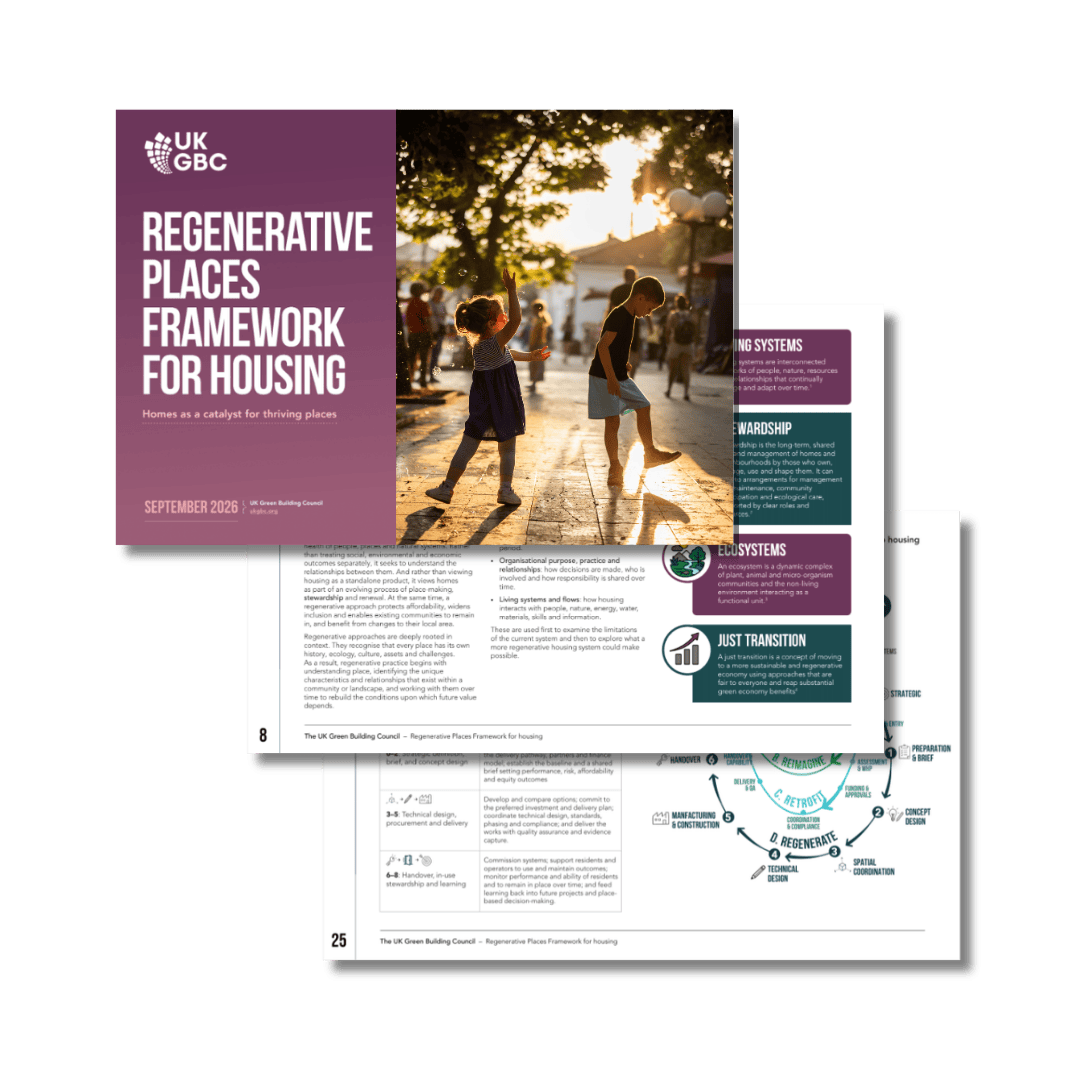
UKGBC launches Regenerative Places Framework for Housing

New Term, Fresh Start: What we need from the new government鈥檚 first year


BuildingLife Campaign: Whole Life Carbon: From Standards to Action


How is flagship climate policy shaping UK construction?

