Brent Cross Town
The social value delivery approach of a new town centre development for the London Borough of Barnet.

Approaches Used
The 鈥楩lourishing Index鈥� is only one part of the social value delivery approach for Brent Cross Town. Over a three-year timeframe the following has been delivered:
Agree on social value purpose, identify priority stakeholder, and understand stakeholder needs
- Argent Related with support from Buro Happold developed a Sustainability Strategy that set out a vision for Brent Cross Town to become a thriving and inclusive exemplar of urban regeneration. Desk-based research was used to understand local need and inform the Sustainability Strategy. This included analysis of previous stakeholder consultation, key local authority documents and various publicly accessible local datasets including ONS wellbeing scores and Joint Strategic Needs Assessments.
- Online discussion groups were then held with a representative group of local community members (led jointly by University of Manchester and Buro Happold). These focused on understanding stakeholder definitions of health and wellbeing, and the priorities for change locally. The approach was based on the UK What Works Centre for Wellbeing and the National Institute for Health Research鈥檚 public engagement guidance. The findings of this work underpinned an initial Theory of Change, in turn, providing further foundations for the following steps.
Create a social value delivery plan and put in place a social value measurement framework
- Rather than develop a social value delivery plan before putting a social value measurement framework in place Brent Cross Town needed a measurement framework to gather bespoke baseline data, ahead of the first major phases of Brent Cross Town delivery. The University of Manchester used a mixed-methods data collection approach, including intercept and online surveys (more than 1,500 participants), direct and automated behaviour observations (more than 10,000 observations), and air pollution monitoring. For each dataset, a matched UK or European comparison was sought.
Understand stakeholder needs and agree social value outcomes
- To add further detail to the baseline data, complementary engagement activities with local stakeholders (community, businesses, local charities) were organised to plug any gaps in evidence. This led to a more comprehensive list of outcomes and indicators within the 鈥楩lourishing Index鈥�.
Create a social value delivery plan
- As part of preparation for a forthcoming Social Value strategy, examples of national and international best practice were compiled.
Ongoing measurement, monitoring and reporting
- To continue the 鈥榞olden thread鈥� of stakeholder engagement, the baseline findings and best practice examples were co-interpreted, to set salient and ambitious targets 鈥� providing 鈥榥orth stars鈥� to guide the Social Value Strategy and planned ongoing monitoring.
Key Sustainability Objectives/ Outcomes
Social Value outcomes
The 鈥楩lourishing Index鈥� includes:
- Subjective Wellbeing (SWB)
- Personal SWB outcomes (hedonic and eudaimonic) e.g. 鈥渓ife going well for me鈥�.
- Social SWB outcomes e.g. life going well for 鈥渦s鈥�.
- Specific SWB outcomes including satisfaction with key aspects of life such as income, jobs, and housing.
- Key wellbeing activities e.g. Connect, Be Active, and Take Notice.
Related
White Collar Factory
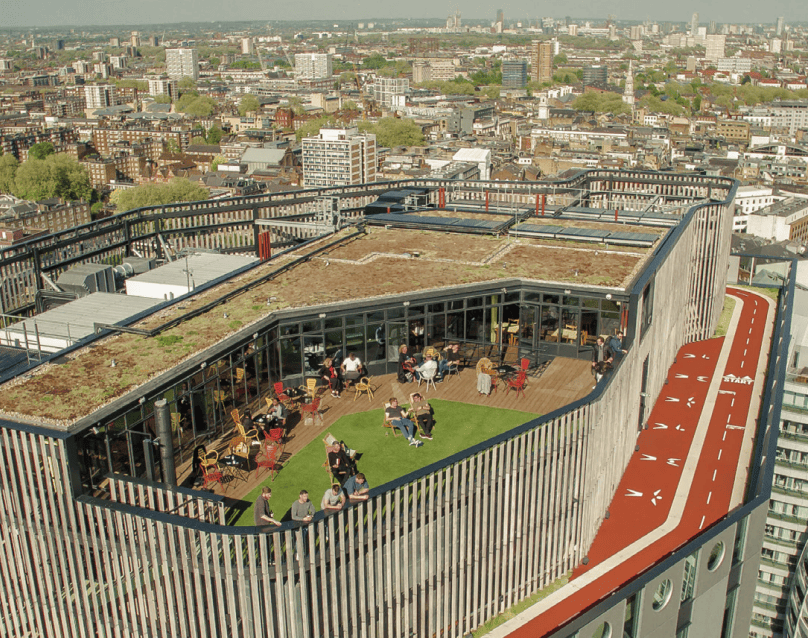
The social value delivery approach for a redevelopment of a major corner site on the Silicon Roundabout in the heart of London's Tech City.


Yorkhill
The social value delivery approach for the mixed-use development plan for the closure of Yorkhill.


Greening Swinton Square
The social value delivery approach for the Greening Swinton Square project which aims to demonstrate how nature-based solutions (NBS) can be an integral part of the design of town centres.