糖心视频

Problem Addressed

With the building industry accounting for 40% of Europe’s energy demand (UNEP), reducing energy demand from building operations is the most cost-effective method to achieve net zero聽while directly improving聽the customer鈥檚聽bottom line.聽But reducing energy demand must not come at the expense of building performance or comfort, meaning solutions must聽be able respond to changing and dynamic building conditions.

This solution was sourced in response to one of UKGBC鈥檚 past challenges on ‘Linking Building Occupancy to Energy Use鈥�.

Solution Overview

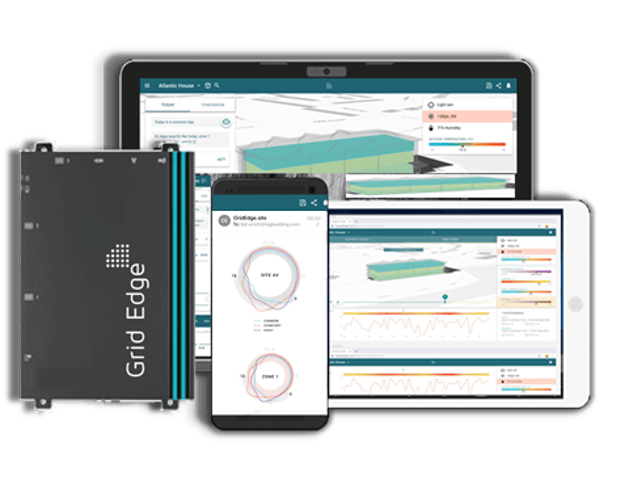
Grid Edge uses AI to help commercial buildings advance towards their net-zero goals by making the complex world of energy simple and predicting tomorrow鈥檚 energy costs, carbon, and comfort. Their mission is to reduce the amount of carbon being released through inefficient energy use. Grid Edge uses a customer鈥檚 building data to automatically flex when, what, and how much energy a building uses, whilst keeping building occupants happy. They are backed by some of the industry leaders and are a trusted energy partner for public and private organisations across the UK. Grid Edge is empowering building owners and operators through visibility, recommendations, and automation.

The solution is built around creating a digital twin of a building that brings together the customers building management system, metering, sensor, and environmental data onto one smart, digital platform. The platform鈥檚 algorithms detect inefficient and unusual energy performance with automatic notifications for rapid resolution. Live data, analytics and automated insights rendered in a bespoke 3D Digital Twin allows real-time optimisation of a building鈥檚 energy performance to reduce energy and carbon costs by as much as 20%. Hardware installation can be completed in a single visit, with any remaining commissioning done remotely. AI predictions are then made using building & contextual data.

Reduced energy costs: Grid Edge鈥檚 technology helps organisations to identify and reduce waste, optimise their energy use, and improve their renewable energy integration. This can lead to significant savings on energy costs, with clients often seeing savings in excess of 20%.

Reducing carbon emissions from energy: Grid Edge can help organisations to improve their ESG rating by reducing their carbon emissions from energy usage and demonstrating their commitment to sustainability. It also enables organisations to use energy when carbon emissions are lowest.

Increased compliance: They can also assist with compliance with complex energy regulations and standards enabling businesses to be ready for future 鈥榯ime of day鈥� energy tariffs and variable carbon reporting.

Case Study

Kent County Council鈥檚 Energy and Estates team has been working with Grid Edge to support their ambition to create a resilient and smart energy system. In Invicta House Grid Edge integrated solar power generation data with the buildings energy profile and created a digital twin and predictive model. The system discovered the HVAC system was running sub-optimally and there was inefficient out-of-hours consumption. A new HVAC strategy was deployed along with targeted energy strategies and energy demand management at peak solar levels, which all resulted in approximately 60% energy savings and an annualised cost saving of c.拢30k. The return on investment was achieved within 12 months.

Facts and Figures

12 months
20 %

This page presents data, evidence, and solutions that are provided by our partners and members and should therefore not be attributed to UKGBC. While we showcase these solutions for inspiration, to build consensus, and create momentum for climate action, UKGBC does not offer commercial endorsement of individual solutions. If you would like to quote something from this page, or more information, please contact our Communications team at media@ukgbc.org.

Related