糖心视频

Problem Addressed

How to help enable the UK to meet its ambitious climate change and carbon reductions targets by addressing the problem of uninsulated suspended floors. The UK has some of the least efficient housing stock in Europe and energy use in homes accounts for approximately 14% of UK greenhouse gas emissions. An unprecedented effort will be needed to upgrade the UK’s 28 million homes to modern standards in order to meet the challenge of climate change.听听

Suspended floors can be a significant cause of heat loss in homes听(up to 20%), potentially as much as through an uninsulated loft or cavity, or solid wall. The void beneath the floor is cold, as ventilation bricks are installed to avoid problems with damp, meaning draughts fed by cold air from outdoors can come up through the floor.听There are about听8 million听UK properties that听would need to be retrofitted. Underfloor insulation is听probably the next best step for energy efficiency and saving money on your bills, while reducing the UK鈥檚 carbon footprint.

Solution Overview

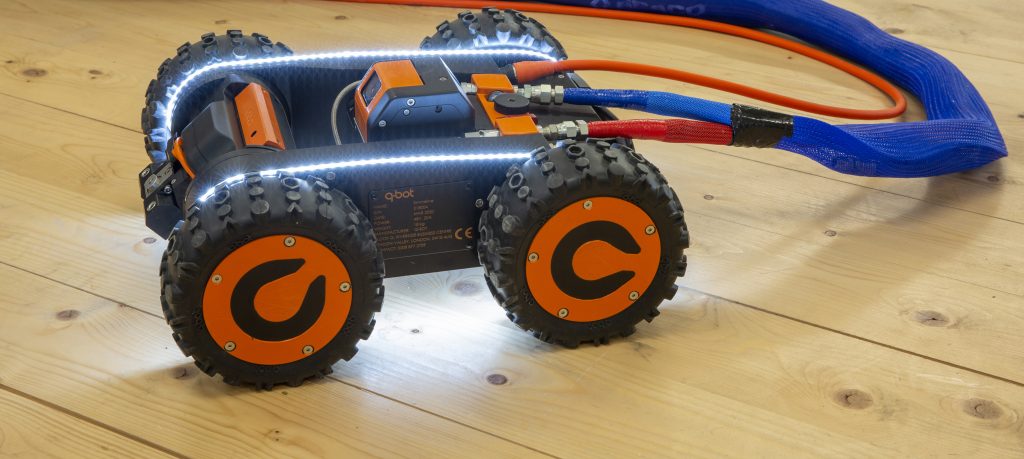
Q-Bot was founded in 2012 with the objective of using robotics, artificial intelligence and digital tools to inspect, maintain and upgrade buildings. Q-Bot has developed an innovative system for reducing heat loss from suspended floors using a robotic device to remotely apply insulation听reaching places it wasn鈥檛 safe or possible to reach before. Q-Bot is the only BBA Certified installer of underfloor insulation, being PAS accredited and TrustMark registered, and qualify for a 25-year guarantee for installs. Q-Bot鈥檚 UFI measure has also been awarded the Queen鈥檚 Award for Innovation and been independently verified by the Energy Savings Trust (EST).听

Q-Bot insulation installation takes 1-2 days and the residents can usually stay in their home throughout the process. The robot is inserted in the underfloor space through an access hatch created in the floor and builds up a 3D map of the environment and condition beneath the floor before and after the insulation is applied.听The robot sprays layers of insulation to the underside of the floorboards, which expands to fill all the gaps, keeping the floor warm, dry and draught-free. The void under the floor stays ventilated, allowing the ground to breathe and avoiding the risk of damp or mould.听Where necessary Q-Bot may be required to fit additional background ventilation in order to meet building regulations as part of an installation. A video of the robot in action can be seen .听

Q-Bot鈥檚 underfloor insulation听improves lives by ensuring people have a cost-effective and non-disruptive way to make their homes warmer, comfortable and more energy-efficient. In many cases we are insulating floors that it was totally impractical to reach without our technology.听Q-Bot already has a strong impact on improving energy efficiency, through the insulation of听more than听1,000鈥檚 of homes across the UK, and much more to come. The benefits of insulating the floor with Q-Bot will result in less draughts (~1/3 for whole house); less temperature stratification (warm feet); and lower energy bills (~拢150/yr, verified by Energy Saving Trust). This also means a reduction in carbons emissions, tackling听the climate change.听

Q-Bot have calculated the carbon impact of their underfloor insulation (UFI) using the Climate Impact Forecast tool. The full carbon cost of a single installation is 777kg/CO2e (this includes the foam, the manufacture of the robot, transportation of components as well as transport to site and application). The carbon saving through energy savings (2600kwh annually, based on Gas Central Heating) is 655kg/CO2e. Therefore the carbon payback period is 1.2 years for an average property.听The expected lifetime impact (based on the insulations life of 42 years) for a single home is -26,741kg/CO2e, this is the equivalent of planting 1,216 trees or would offset driving a car around the world 3.3 times.

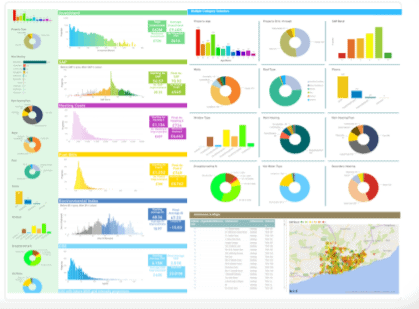
Q-Bot听has created a case study across 100 UK homes to show the impact on comfort and energy savings of its robotic underfloor insulation.听100 properties were selected to include a wide range of housing types, different ages,听sizes听and heating type.听The energy savings achieved by the upgrades were modelled in SAP using elemental U-values听for the individual floors and the airtightness test results of each property.听听

Q-Bot鈥檚 solution was shown to provide the most cost-effective measure after loft insulation, at an average cost of 拢400 per EPC point. It also produced an average annual energy saving of 拢151, with properties saving up to 拢665 per year. The average EPC improvement across the range of properties was 6 points. The average sales price for the installs was 拢2,400 per property based on a minimum volume per year.听Therefore the average payback period is about 16 years, excluding government funding which would result in a lower installation cost and therefore payback period.听

For a typical home, Q-Bot offers energy savings for a lower upfront cost than all other measures.听Q-Bot鈥檚 solution听is approximately half the cost of听external wall insulation (EWI)听and听internal wall insulation (IWI). It has a lower calculated cost per EPC point and both of these measures would involve significantly more disruption to those living in the property, as well as enabling works, redecoration and removal/ replacement of furniture. Neither IWI or EWI would remove cold draughts originating from the floor.听听

Although boiler replacement shows a payback time of 25 years, it is worth noting that its life expectancy is 12 years. In comparison Q-Bot鈥檚 solution has an expected life of 40 years and a material warrantee of 25 years.

Case Study

The case study noted above across 100 homes can be found .听

Q-Bot has also worked with more than 40 local authorities and housing associations across the country to upgrade their housing stock, such as Peabody, Clarion Housing, The Guinness Partnership, Torus, Castle Rock Edinvar, Nottingham City Homes and many others. As an example,听Q-Bot installed underfloor insulation to 63 properties听of Ealing Council听with a variety of property types with suspended timber floors in London, starting in September 2019. Q-Bot achieved a 76% reduction in heat loss through the floor and an estimated 27% reduction in cold draughts.听A pre-install survey checked the property for suitability, and during this the surveyor advised the tenant about the install process.听

Installs were typically completed in one or two days, during which time the tenant was able to remain in the property, and experienced minimal disruption. A number of access hatches were made in the floor to allow the robot to access the void, at the end of the install the flooring was made good and the tenants signed off to agree they were satisfied with the work that had been carried out. The U value of the floor in all homes after installation of underfloor insulation complies with the Part L1B requirement for upgrading retained thermal elements in existing dwellings of <= 0.25 W/m 2 K.听 Expected savings per property are:听
鈥� Average Energy Saving: 1,940听KWhrs/yr听
鈥� Average SAP Improvement: 3.2 points.听
鈥� Average CO2 Saving: 400kgs/yr听
鈥� Lifetime Savings across all 63 properties: 1,070 tonnes of CO2听

听Case studies with other social housing providers can be found , including Camden Council,听Argyll听Community听HA, Hexagon HA and Castlehill HA.听听

Facts and Figures

1-2 days
1.2 years
-26,741 kg/CO2e

This page presents data, evidence, and solutions that are provided by our partners and members and should therefore not be attributed to UKGBC. While we showcase these solutions for inspiration, to build consensus, and create momentum for climate action, UKGBC does not offer commercial endorsement of individual solutions. If you would like to quote something from this page, or more information, please contact our Communications team at media@ukgbc.org.

Related